By Rod Johnson

Rodric believes Moroni included special instruction for Modern times and wants to share his unique perspective the same way Moroni shared in The Book of Mormon: Another Testament of Jesus Christ.

Meet the Twin Latter-day Saints - Africa to America

When people enter into a new setting, they like to see things that remind them of themselves. The same thing occurs in church, particularly The Church of Jesus Christ of Latter-day Saints. When African Americans join the church, they find in many areas that no one in their congregations actually provide them with a visual reflection that matches their own. Seeing so few people that reflect can cause social trouble and loneliness.
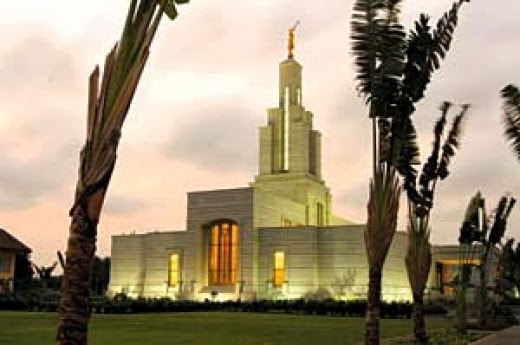
Ghana Temple

Members of Twin Latter-day Saints & Friends and Family

Abba Nigeria Temple
Abba Nigeria Temple
Source: www.ksl.com

Members of Twin Latter-day Saints Friends and Family


The Need

Dale Wight saw a need in the Latter-day Saint community for something to help this minority in its US LDS community, Black Latter-day Saints. He calls it Twin Latter-day Saints.
The term Twin Latter-day Saints refers to the people on the other side of the world that look like African Americans who are joining the church and become examples of faith and strength.
What happens when you look in a mirror? You see your reflection! Your reflection looks like you and moves with you, but it is different in that it does the same thing on the opposite side. It will not disturb you because you know that it is a reflection of what you are doing.
In Africa, there exists a great many Latter-day Saints who look like their twin brothers and sisters in America, African Americans.
This group of twins to the African Americans purpose is to be lodestars of faith of people that look like them and are also Latter-day Saints!
The church is slowly growing among African Americans--too slowly in the view of many. Yet it is flourishing in Africa.
In the feature film Meet the Mormons the bishop as shown below is one of thousands of faith Latter-day Saints who identifies as African American
See Meet the Mormons in select theaters October 10th.
#meetthemormons  #sharegoodness
It is believed that African Americans ostracized in the LDS church after joining because many give up traditional cultural ties to music and worship to associate with the predominately White congregations in America.
With so few Black Latter-day Saints to associate with, these new members may find it tempting to leave despite the burning witness that the teachings of the church are true.
The cultural ties among African Americans as in any ethnic group can be very powerful being that African Americans had to depend on themselves as a group mostly through their Black churches over the decades after slavery and through the Civil Rights Movement.
Cultural connections pale in comparison to the blessing of the gospel, but they do exist. Dale Wight’s idea of providing a way for these members in America to see people that look like them participating in traditional Latter-day Saint practices is an unofficial step to move toward alleviating that issue. Dale said,
Part of the inspiration for this group came from an encounter my wife and I had with Elder Sitati in 2009. He spoke at the Los Angeles Stake's conference shortly after joining the [First Quorum of the Seventy]. My wife [Barbara] asked how we could get more missionaries from Africa to work in the black communities in the US like [the one] she came from.
Though the answer Barbara Wight sought did not come directly because of Elder Sitati, it came in the form of her husband. On the Twin Latter-day Saints Facebook page it reads:
This group is for Black Latter Day Saints and their friends and families. It also is for those who may be interested in the restored gospel of Jesus Christ.
The purpose of this group is to share testimonies, uplifting messages, scriptural quotes, references, questions and answers, upcoming events and activities, poetry, good clean comedy, and FamilyHome Evening Ideas.
Twins are two people who look alike but have had different experiences. "Twin Latter-day Saints" refers to the Black Latter-day Saints in Africa and in America; they look alike but have had very different experiences. The Church is strong and growing rapidly in Africa. Already, there are more than twenty stakes in Nigeria alone. So far, there only have been two black stake presidents in the US.
One purpose of Twin Latter-day Saints will be to become a forum to leverage the Church's strength in Africa to provide missionary and fellowshipping support in the U.S. This may be simple things like posting videos and photos of stakes and wards in Africa so our [church] members and others in the US can see and hear parts of the Church [in Africa] in which they would be like all the other [areas of the church].
Johannesburg South Africa Temple
Source: www.mormontemplepics.com
Not yet under construction. This picture is of a Meeting House call a Ward Building in Durban, RSA
Source: Durban South Africa Temple (Announce 2011)

Blackness Explored


Source

On The African American Experience

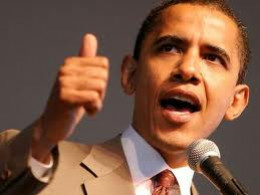
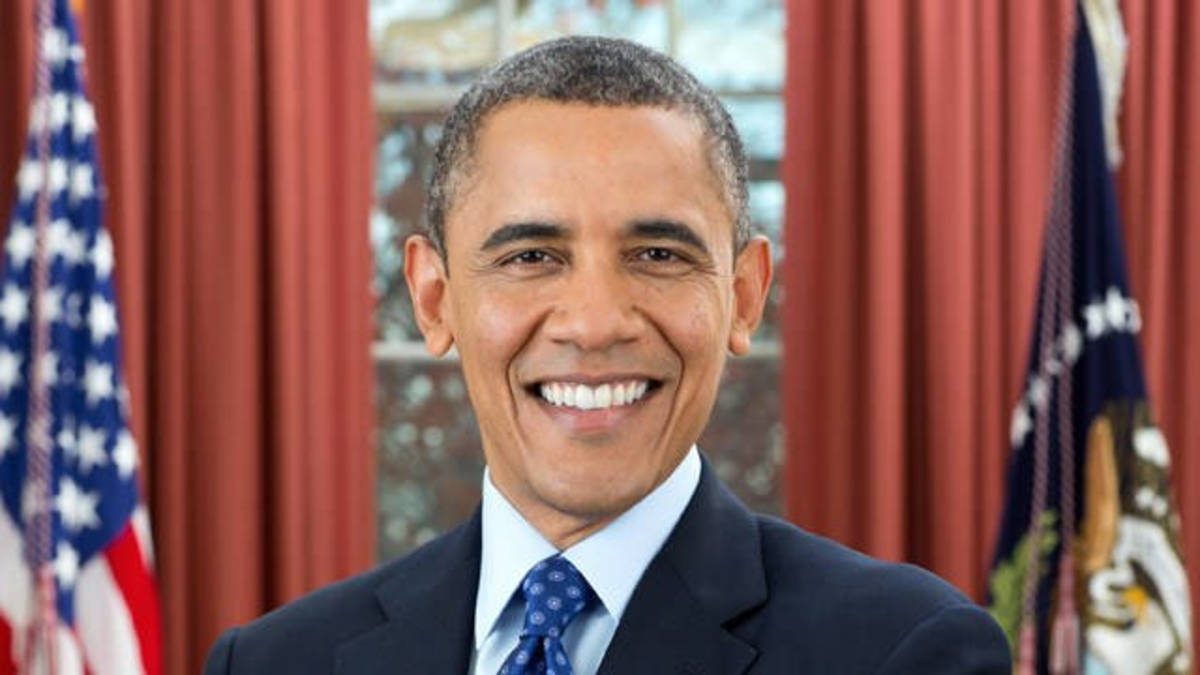
Aside from the hurt and bitter feelings of some die-hard Mitt Romney supporters and the white-hot anger of the Anti-Obama people, electing President Obama for a second term created history again for the American people.
During Black History Month from 2008 forward, it can be said that a man of African heritage ruled the most powerful nation in the world for eight years! He ruled a nation where less than 200 years previously his African heritage would have pegged him a slave. Just 40 years shy of the Civil Rights Movement did a minority take office!
It does not matter that President Obama is a Democrat or that he is bi-racial. Because there is a shred of African in him, he is considered African American according to American racial tradition. He was born in America, no matter what the people say opposite about that. He lived his life mostly as an African American and will be listed in the annals of time as an African American President! During the first election, however, it was not so.
What the president did for Americans is to introduce the notion that race should not matter.

Black By Default

Over the course of the years President Obama served the country, the attitudes of many African Americans changed towards him.
Apparently, the fact that his father is not American and actually from an African nation means that Barack Obama, the president, has no African American stock in his genes.
He is the first generation, and his ancestors did not share in the humiliation of the African American historical struggle OUTSIDE of the Civil Rights Movement.
No matter how the dial is twisted, the president is of African descent and can call himself African American or Black, but he cannot claim the struggle that generational groups of African Americans claim.
The president knows his ancestral roots and has a connection to his heritage if he so desires. He has a brother residing overseas to connect to his father’s homeland. President Obama’s connection to true African American culture is through his wife Michelle who is actually a generational American of African descent.
What the president did for Americans is to introduce the notion that race should not matter. It seems that African Americans are so psychologically distressed culturally as a group that they will African-Americanize any and every person with African bloodlines—whether from slavery ancestrally or Africa itself!

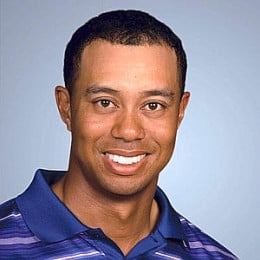
Tiger Woods

Source
It is no surprise that so many shades of African Americans exist with so many hair textures. Bi-racial and multi-racial people who have African ancestry are not allowed to express their unique heritage without ridicule. Even if, say, Tiger Woods says he is not African American, that group will claim him by default.
In 1997, Tiger woods attempted to except himself from the African-American community at large and defined himself. Silly man!
People are not allowed to define themselves in American society! Regardless of what he decided to call his ethnic and racial disposition, most of the world labels him Black.
President Obama slyly avoided racial remarks about his origin--the thing that Tiger Woods should have done on the Oprah Winfrey Show in 1997.
When asked by Oprah did having the label of "African American" thrown at him bother him he admitted, “It does...I'm just who I am, whoever you see in front of you.”
"I'm just who I am, whoever you see in front of you."
The issue with Tiger Woods statement is that he did not leave it at that. He proceeds to describe what he IS when what people SEE in front of them is a light-complexioned Black man.
President Obama did what Mr. Woods should have done. He let people describe what they saw and did not pander to any direction. People saw, eventually, an African American president; no, an American president with African-American ethnicity and racial social classification.

Black People Claim Everybody

Source
Source

Why all this grabby behavior by this Group of Americans?

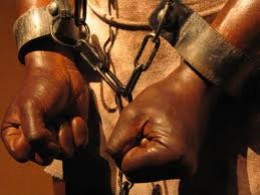
The simple answer is the past is not a proud one for this group. Millions of people were purchased by Europeans and taken to the American continent against their wills.
In The Truth about Being Black in America can be found a perspective on the psychological implication of this past of servitude. In it is a term coined for the article called Collective Social Regard or CSR. CSR can be applied to any group but fits specifically well with African Americans because of their unique, singular and peculiar history.
Since the past is such a negative matter for this group of Americans, it claims as much of the present and future that it can to fill the void of cultural heritage.
In America, some of these citizens go so far as to try to create alternate cultural heritages to differ extremely from the majority, Caucasians. The irony about diverging in such a way is that the new cultures are based on European values, and not those of the mysterious Africans forced to emigrate in ships.
African Americans are a uniquely American group through and through. This group has a heritage that even the Native Americans can not equal because their ancestors migrated here by land and sea—by choice!
No other group was forced as an entire race of thousands of ethnicities to relocate, as were African Americans with the additional suppression of their culture and language. Few other groups or races. if any other. in American history survived cultural genocide committed against them, as the African American.
The election of President Obama for two terms proves that racial barriers can be overcome by minorities grounded in his or her history and comfortable with his or her heritage as is President Obama. Culturally, he and his family are similar enough to the majority to appeal to their humanity.
In addition, as a bi-racial man in a European culture, President Obama had to bear his burden of ridicule from both Black people and White people. He had to decide with which group he identified most and hopefully be accepted into that group. He struggled with identity issues and found that he identified with African Americans. His struggle was real and personal though his heritage was not of slave stock.
Will the son (or daughter) of a slave ever be president of these United States? Will a person who has ancestral stories of sharecropping after the Emancipating Proclamation was put forth by the Great and Honorable President Abraham Lincoln gain such lofty heights? Does it matter if that ever happens because a minority won the race? The answer to those questions depends on the perspective from which the reader views these words.
Source

When Americans voted, they voted for a president of the United States of America.

Americans did not vote for a Black president. Barack Obama did not run as a Black candidate. In meetings of some African Americans around the nation, certain expressions can be heard that are acridly describing the president calling him the head N**ger in charge.
Statements by comedians who say, “You know how WE do,” implying that there is some difference in the methods of enjoyment, style, life or integrity of Blacks as opposed to other races and ethnicities.
There well may be many cultural differences. Those differences are not a conviction that the “WE” are honorable and praiseworthy people.
President Obama means so much to African-Americans because he represents something good and positive like unto Martin Luther King, Jr.
Source

Conclusion

The former president will always be to African-Americans the face of freedom in America. Maybe one day, some minority woman of Mexican ancestry will rise to popularity and represent the Latinos. Will the Latinos accept this person if he or she is born in the US Puerto Rico, with one parent from Spain and the other parent with Mexican heritage? For now, the spotlight is on President Trump, which to many seems like a step backward in "post-racist" America.

Place of Discovery

In life sometimes we can be refugees or outcasts due to persistent struggle. It is a strange way to look at things being that so many people are refugees seeking amnesty from one country or another. Individually as we seek amnesty from the trials of life, some of us seek amnesty in a drug or an alcoholic beverage finding it to be a trap worse than the thing originally causing a need for sanctuary!

Sweet as it can be, life Will have challenges, challenges potentially able to chase away the choicest chances of renewal and reward down paths that prove difficult to course correct. Notions arising that lead us to seek escape from life because of with what we are challenged overwhelms us to the point where we cannot be the hero of our own life story, warrants a reflective moment or more to reevaluate the purpose of life.

Why are we here? Where are we going? What is my true origin? Levels of discovery in these questions take us on emotional journeys and religious quests to find the centering answers that allow us the psychological steadfastness to endure and prevail. Short or long, easy or hard the journey to discovery is often where we find ourselves as we proceed to the eventual destination.

Journeying despite the factors of fraught littering the path has revealed personally who I am and who I want to be as I walk along the way outcast at times from life. What is that, pray, tell? I am a child of God. He has sent me here to Earth. He has given me a home with parents and siblings. Now I am a parent with children kind and dear to me.

I started a journey to Utah that led me down a path to see the destination God revealed to me as the stepping stones to a greater recognition of living--who I needed to be at that point. The stones are firm, but the water from which they provide me a dry crossing is cold because often do I fall in and have to start the trek across the waters anew. Feeling failure, a good instructor, God shows me, being outcast is sometimes the means of finding out with a vengeance that I am one of His chosen if I will have Him.

I, Refugee - The Hero of My Life StoryI want you to know reader, that I was at the lowest point of discouragement I could be and still call myself a Christian when we started this Utah journey. This is the first installment of being trapped in Utah.

Tales from Umtata: Golden Investigator

Missionary Experiences Are What You Make Them


As missionaries for The Church of Jesus Christ of Latter-day Saints, we take the opportunity to study the gospel daily so that we may use that knowledge to lead people to Christ. Being a missionary does not exempt us from our human frailty, however. My weakness is in full bloom this morning.  

Wake up Elder Johnson,” Shouts Elder Thompson gleefully. “It’s time for comp’ study.” 

Glaring momentarily at him, I roll around n bed a bit before rising. Elder Thompson wakes me up in the middle of such a beautiful dream, resentment. I had a new companion in my dream. 


It was no secret that Elder Thompson and I have friction in our companionship, except to Elder Thompson. I hide it from him out of resentment. Younger than I am and chippier every day, I envy.

“What are we going to study today, Elder,” I said attempting to hide the irritation in my voice. Not that it matters. This guy is so oblivious to my issues with him. Or is he?

Elder Thompson furrows his brow and suggests, “The first discussion. If we study it today, we will teach it.” 

Resentment and all, I believe him. Tossing the word out there so often is annoying, but I resent him because he is such a good person even though I want him to be evil so that I could feel justified in being upset with him. I cannot stay upset long. He is too cheerful! I am not a morning person. He is not a good leader either. I have a detailed list of all his flaws. All of them!

After Breakfast and personal study, we go over the plan for today. We were told that planning in the morning is highly effective. We want, if nothing else, to be productive. So, we plan to do some street contacting for the morning and service at the Hospital counting pills. We scheduled a few appointments with the hope that they will not fall through. We have no backup plan because the concept eludes Elder Thompson. 

I am his “Greenie,” and I resent it! Did I say I resent it? I really resent it!

After coordinating some last-minute plans with the other two Elders in the boarding, Elder Danisa, and Elder Streadbeck, we shove off to start our day. About noon, we return to the boarding to lunch for two hours—planning not to return for dinner. 

Elder Thompson and I are off to work. All of our appointments seem to be canceling as we get to their homes! On top of that, we walk in the sweltering sun uphill both ways! How is that even possible! Only in Umtata (Mthatha now)!

Well, okay, maybe not both ways—but it feels like it. After rescheduling all of the appointments, Elder Thompson suggests that we tract Singqangana Crescent. (When saying this word, Singquangana, the "q" makes a popping sound. Xhosa is an exciting and beautiful language!) I agree fully expecting to find some good people to teach. finally. Resentment is at an all-time low due to the heat and tiresome walking.

The Heat Beats Down. 

We two, heads high, armed for battle, marched up to the first house to begin our adventure. Every door we go to no parents are home or they cannot speak English! A few said "No," which is uncommon in Xhosa Culture when it comes to having messengers of God. I remember that day like it was this morning, though it was 20 years in the past.

Discouraged, we shoved on with little faith in finding anyone. We tracted for 5 hours and it was getting dark. 
Elder Thompson wanted to turn back and do something more effective but we resolved to tough it out until the end of that long uphill street. After a few more rejections or no contacts, I gave up and wanted to go home. I was sick of no success. Elder Thompson felt the same way, but he looked at me, and then looked up the street. We had five more houses, and we wanted to get them. 

“Let’s just do a few more,” he said. “We might have some success.” 

“Well, if we are going to have success, we are teaching at the next house.” 

“We will teach at this next house,” promised Elder Thompson with determination wanting to get a good investigator for us to teach. 
(A person interested in our message was an investigator. Missionaries call the friends where I live currently.) We had prayed for such an experience. We hoofed it to the door and knocked but no answer. As we, crestfallen, moved to leave, the door crept open revealing the face of a lovely middle-aged Xhosa woman. She regarded us intently waiting for us to explain our presence at her door at such an hour in the night, about 7 pm.  


Spiritual High


“We are missionaries from The Church of Jesus Christ of Latter-days Saints,” began Elder Thompson. “We have a message about a plan that God has for us to be happy and we want to share it with you and your family. Would you be interested?” 

“O yes, I would like for you to share it with us, but I have nowhere for you to sit. In our house live others who I let out to (rent), and my family and I only use this one room.” 

“We don’t mind,” I said. “We are here to share with you not for comfort, but out of love.” 

“Is your husband home,” asked Elder Thompson. 

“No, I am divorced,” she responded. Red flags went off in our minds. We knew better than to enter a woman’s home without a male escort with us. It would look shady to the neighbors and our Mission President. Something burned inside of us to teach, though. 

“Can we teach you outside before the night becomes too dark,” says Elder Thompson. 


English was not her first tongue, though she spoke it beautifully. Elder Thompson and I had grown into the habit of speaking very simply and directly among our Xhosa-speaking family. So, if the dialogue seems contrived, it is.

“Yes," she responded agreeing to meet with us, "On my stoop. I will get you some chairs and I will sit on the stoop.” She went inside. We looked at each other, knowing our goal to teach families. We questioned each other with our eyes. 

We walked around the house to the open area where the stoop was, “Do you think we should teach her," I asked. 

“Yeap.” 

“I do too, I hope it goes well.” 

We sat well in the open where neighbors and passersby could see and commenced the introduction of ourselves and the discussion, the first discussion. Immediately the Spirit attended us. Her name is Nomakwasi Magwensthu and she listened to us. I felt as if my heart would burst with joy as I spoke and listened—bearing testimony of my companion’s words and those of my own. 

She believed all. I asked, "If we gave you a copy of The Book of Mormon: Another Testament of Jesus Christ, will you read it?” 

“Yes, but I cannot have it now.” I was crushed by her response. Did she not feel the spirit, I questioned internally? “I will take it later because I have no money to pay for it now. How much does it cost? I will send my son after it.” Immediately my soul delighted again.

“Nothing,” answered Elder Thompson gleefully, “It is a free gift to you from us.” 

With that, she took the book, hugged it, and caressed it. We continued with the discussion and scheduled another appointment to follow up. With that discussion, we knew a baptism would come. Our walk downhill to our boarding seemed almost effortless as we floated on the feelings we experienced just moments before at Sister Magwentshu’s. My respect and love for Elder Thompson increased and my acrimonious thoughts of him ceased too.

Street Contacting On Umtata's (Mthatha) Town Square. Missionary Stories.

One of the hottest days that I could remember is in February,  the middle of summer in South Africa! Being a missionary for The Church of Jesus Christ of Latter-day Saints was one of the dreams of my life I fulfilled as I went about with Elders Thompson, Streadbeck, and Danisa doing community service at the medicine dispensary counting pills and putting them in bottles.

The city, Umtata (now Mthatha), was always alive with pedestrian activity in the center of town near the government buildings. We four headed there to do some street contacting to tell any interested passerby that we had a life-changing message to share.

Any and everybody who is anybody passed through that town center in front of the courthouse on business—at least once a week. So of course, it was the best place to open our mouths to the public.

As usual, we four prayed and separated to do our work. We always made sure we remained within earshot of each other, but on this particular day, earshot rules proved challenging to keep. Missionaries follow rules that protect them from things, kidnappings, and scandals in the local area that would cause the locals not to listen or trust them and the Church. The rules also help to keep the Church out of the news in the wrong ways due to the misbehavior of its representatives.

Street contacting was not one of the things I enjoyed doing because of the rejection that usually followed and how public and embarrassing those rejections could become. Being a new missionary at the time, I really did not want to be out there. Cold-calling with faces is what I called it--my face to another person's face who might spit in mine!

Remembering that I was there to share the truths that I had come to know because I loved God, I pressed forward. "Excuse me, sir," I said to a smartly dressed man walking in the courtyard in front of the Courthouse. "I am a missionary from the Church of--"

"I no English," was his brisk reply as he moved on dismissively.

"Excuse me, Sir," I said to the next man near me. "I have a message from the Lord!"

"You are so young to teach me emfana (young man)," the other man laughingly retorted before moving passed me with an incredulous smirk on his face. I hate rejection. 

Rejection was not so bad in Umtata (Mthatha). It came so infrequently because of the pleasant nature of the Xhosa people that I learned to look past it. Those who did accept my invitation were not precisely the ones I targeted. Black Americans did not frequent Umtata. I was a novelty. That little bit of celebrity would get attention as the people strained at my message only to get a chance to speak to a Black American.

I recorded their names and weeded them out by inviting them to Church. If they pitched up at Church, we would teach them the message we promised would bring them joy in life. The ones whom we targeted, capable men, I hesitated to pitch on occasion. We were discriminant of whom we tried to actively teach. Such discrimination was not due to any belief that boys, women, or girls would not add value to the Church. We proceeded that way so that we could find men with wives and children who could, as a family unit, explore the Gospel together. That was our goal, families. We targeted men because women tend to be more willing to seek out the missionaries on their own. The best way to get to whole families was through the husband, we determined. 

In this mode of discrimination, I found myself when I jolted at a sight. There I stood in a suit in the sweltering hot sun of South Africa when my estranged girlfriend walked up! At least that is who she reminded me of the moment I saw her. I spoke to her.

"Hello," She said. "What are you doing out here?"

"I'm sharing a message about Jesus Christ,” I returned overcoming my amazement. I saw two gentlemen pass by who looked as if they would speak to me, but saw I was engaged with this young woman of marital age and moved on. Frustration began to well up inside of me because this woman made it hard for me to think clearly.

"That is good,' she continued."I too am going about speaking of God and His word."

Deciding to make the best of this I said, "So what church do you belong to?"

"Jehovah’s Witness, I go to the Kingdom Hall"

Yes! I shouted within myself. If I tell her I'm a "Mormon," (though we prefer to be called members of the Church we belong to) she will run away in fear. "Really, I have an older brother in that church? I am a Mormon." She did not move.

“I attend The Church of Jesus Christ of Latter-day Saints, the Mormons.” Still, she did not move.

“What church is that?” she returned interrogatively. 

She had a smile on her face and she kept the sweat from her eyes with a white kerchief. I thought profoundly of my estranged love and how much I missed her; but also on my mind were the dozens of potential priesthood holders passing me by as I explained things to this woman, who looked like the woman I loved!

Also, Jehovah's Witnesses tended to not appreciate "Mormon" Missionaries in the United States. Apparently, that was not the case in the good old Republic of South Africa, RSA!

For some reason, my companion had not rescued me from this lengthy conversation with the girlfriend look-alike. The rule is if the conversation went too long, the other missionary would come and join the conversation or save the other from mobs, which Elder Thompson had to do several times for me. But he was engaged with someone too!

The purpose of this young woman was to convert me to her beliefs. I could tell after a few minutes. She and others of her faith were in the square competing for proselytes,, and I was the enemy. Her whole purpose was to keep me occupied as the others sought out candidates after she discovered I was in direct competition with her beliefs. 

“Elder Johnson," called Elder Thompson finally coming to my aid after the woman left.  "How come you did not end the conversation and move on?" I had moved out of his eyesight during my interview with the South African girlfriend doppelganger.

I shrugged it off, and he never let me too far from his sight again. I think I may have mentioned to him later how much that lady looked like my "waiting for me unofficially" girlfriend. I learned that day that polite conversation is good, unless you are a missionary, and the person you speak to is a replica of the woman whom you left in the States missing severely!

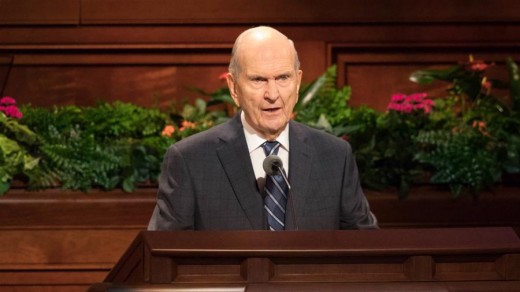
The Book of Russell M. Nelson

Russell M. Nelson President of the Church of Jesus Christ of Latter-day Saints

Source

Chapter One

Revelation given to President Russell M. Nelson of the Church of Jesus Christ of Latter-day Saints. President Nelson explains why correcting the Church name is important. If it is Christ's church it must be called in His name. The premortal nature of Christ, His suffering, resurrection, and redemption of man. Saints must help correct the name of the Church among themselves and others. God will bless the Saints for obeying.
  1. My beloved brothers and sisters, on this beautiful Sabbath day we rejoice together in our many blessings from the Lord. We are very grateful for your testimonies of the restored gospel of Jesus Christ, for the sacrifices you’ve made to stay on or return to His covenant path, and for your consecrated service in His Church.
  2. Today I feel compelled to discuss with you a matter of great importance. Some weeks ago, I released a statement regarding a course correction for the name of the Church.1 I did this because the Lord impressed upon my mind the importance of the name He decreed for His Church, even The Church of Jesus Christ of Latter-day Saints.2
  3. As you would expect, responses to this statement and to the revised style guide3 have been mixed. Many members immediately corrected the name of the Church on their blogs and social media pages. Others wondered why, with all that’s going on in the world, it was necessary to emphasize something so “inconsequential.” And some said it couldn’t be done, so why even try? Let me explain why we care so deeply about this issue. But first let me state what this effort is not:
  4. It is not a name change.
  5. It is not rebranding.
  6. It is not cosmetic.
  7. It is not a whim.
  8. And it is not inconsequential.
  9. Instead, it is a correction. It is the command of the Lord. Joseph Smith did not name the Church restored through him; neither did Mormon. It was the Savior Himself who said, “For thus shall my church be called in the last days, even The Church of Jesus Christ of Latter-day Saints.”4
  10. Even earlier, in AD 34, our resurrected Lord gave similar instruction to members of His Church when He visited them in the Americas. At that time He said:
  11. “Ye shall call the church in my name. …
  12. “And how be it my church save it be called in my name? For if a church be called in Moses’ name then it be Moses’ church; or if it be called in the name of a man then it be the church of a man; but if it be called in my name then it is my church.”5
  13. Thus, the name of the Church is not negotiable. When the Savior clearly states what the name of His Church should be and even precedes His declaration with, “Thus shall my church be called,” He is serious. And if we allow nicknames to be used or adopt or even sponsor those nicknames ourselves, He is offended.
  14. What’s in a name or, in this case, a nickname? When it comes to nicknames of the Church, such as the “LDS Church,” the “Mormon Church,” or the “Church of the Latter-day Saints,” the most important thing in those names is the absence of the Savior’s name. To remove the Lord’s name from the Lord’s Church is a major victory for Satan. When we discard the Savior’s name, we are subtly disregarding all that Jesus Christ did for us—even His Atonement.
  15. Consider this from His perspective: Premortally, He was Jehovah, God of the Old Testament. Under the direction of His Father, He was the Creator of this and other worlds.6 He chose to submit to the will of His Father and do something for all of God’s children that no one else could do! Condescending to come to earth as the Only Begotten of the Father in the flesh, He was brutally reviled, mocked, spit upon, and scourged. In the Garden of Gethsemane, our Savior took upon Himself every pain, every sin, and all of the anguish and suffering ever experienced by you and me and by everyone who has ever lived or will ever live. Under the weight of that excruciating burden, He bled from every pore.7All of this suffering was intensified as He was cruelly crucified on Calvary’s cross.
  16. Through these excruciating experiences and His subsequent Resurrection—His infinite Atonement—He granted immortality to all and ransomed each one of us from the effects of sin on condition of our repentance.
  17. Following the Savior’s Resurrection and the death of His Apostles, the world plunged into centuries of darkness. Then in the year 1820, God the Father and His Son, Jesus Christ, appeared to the Prophet Joseph Smith to initiate the Restoration of the Lord’s Church.
  18. After all He had endured—and after all He had done for humankind—I realize with profound regret that we have unwittingly acquiesced in the Lord’s restored Church being called by other names, each of which expunges the sacred name of Jesus Christ!
  19. Every Sunday as we worthily partake of the sacrament, we make anew our sacred promise to our Heavenly Father that we are willing to take upon us the name of His Son, Jesus Christ.8We promise to follow Him, repent, keep His commandments, and always remember Him.
  20. When we omit His name from His Church, we are inadvertently removing Him as the central focus of our lives.
  21. Taking the Savior’s name upon us includes declaring and witnessing to others—through our actions and our words—that Jesus is the Christ. Have we been so afraid to offend someone who called us “Mormons” that we have failed to defend the Savior Himself, to stand up for Him even in the name by which His Church is called?
  22. If we as a people and as individuals are to have access to the power of the Atonement of Jesus Christ—to cleanse and heal us, to strengthen and magnify us, and ultimately to exalt us—we must clearly acknowledge Him as the source of that power. We can begin by calling His Church by the name He decreed.
  23. For much of the world, the Lord’s Church is presently disguised as the “Mormon Church.” But we as members of the Lord’s Church know who stands at its head: Jesus Christ Himself. Unfortunately, many who hear the term Mormon may think that we worship Mormon. Not so! We honor and respect that great ancient American prophet.9 But we are not Mormon’s disciples. We are the Lord’s disciples.
  24. In the early days of the restored Church, terms such as Mormon Church and Mormons10 were often used as epithets—as cruel terms, abusive terms—designed to obliterate God’s hand in restoring the Church of Jesus Christ in these latter days.11
  25. Brothers and sisters, there are many worldly arguments against restoring the correct name of the Church. Because of the digital world in which we live and with search engine optimization that helps all of us find information we need almost instantly—including information about the Lord’s Church—critics say that a correction at this point is unwise. Others feel that because we are known so widely as “Mormons” and as the “Mormon Church,” we should make the best of it.
  26. If this were a discussion about branding a man-made organization, those arguments might prevail. But in this crucial matter, we look to Him whose Church this is and acknowledge that the Lord’s ways are not, and never will be, man’s ways. If we will be patient and if we will do our part well, the Lord will lead us through this important task. After all, we know that the Lord helps those who seek to do His will, just as He helped Nephi accomplish the task of building a ship to cross the sea.12
  27. We will want to be courteous and patient in our efforts to correct these errors. Responsible media will be sympathetic in responding to our request.
  28. In a previous general conference, Elder Benjamín De Hoyos spoke of such an event. He said:
  29. “Some years ago while serving in the office of public affairs of the Church in Mexico, [a companion and I] were invited to participate in a radio talk show. … [One of the program directors] asked [us], ‘Why does the Church have such a long name? …’
  30. “My companion and I smiled at such a magnificent question and then proceeded to explain that the name of the Church was not chosen by man. It was given by the Savior. … The program director immediately and respectfully responded, ‘We will thus repeat it with great pleasure.’”13
  31. That report provides a pattern. One by one, our best efforts as individuals will be required to correct errors that have crept in through the years.14 The rest of the world may or may not follow our lead in calling us by the correct name. But it is disingenuous for us to be frustrated if most of the world calls the Church and its members by the wrong names if we do the same.
  32. Our revised style guide is helpful. It states: “In the first reference, the full name of the Church is preferred: ‘The Church of Jesus Christ of Latter-day Saints.’ When a shortened [second] reference is needed, the terms ‘the Church’ or the ‘Church of Jesus Christ’ are encouraged. The ‘restored Church of Jesus Christ’ is also accurate and encouraged.”15
  33. If someone should ask, “Are you a Mormon?” you could reply, “If you are asking if I am a member of The Church of Jesus Christ of Latter-day Saints, yes, I am!”
  34. If someone asks, “Are you a Latter-day Saint?”16 you might respond, “Yes, I am. I believe in Jesus Christ and am a member of His restored Church.”
  35. My dear brothers and sisters, I promise you that if we will do our best to restore the correct name of the Lord’s Church, He whose Church this is will pour down His power and blessings upon the heads of the Latter-day Saints,17 the likes of which we have never seen. We will have the knowledge and power of God to help us take the blessings of the restored gospel of Jesus Christ to every nation, kindred, tongue, and people and to prepare the world for the Second Coming of the Lord.
  36. So, what’s in a name? When it comes to the name of the Lord’s Church, the answer is “Everything!” Jesus Christ directed us to call the Church by His name because it is His Church, filled with His power.
  37. I know that God lives. Jesus is the Christ. He leads His Church today. I so testify in the sacred name of Jesus Christ, amen.
Verses Added.