By Rod Johnson

Rodric believes Moroni included special instruction for Modern times and wants to share his unique perspective the same way Moroni shared in The Book of Mormon: Another Testament of Jesus Christ.

Blackness Explored


Source

On The African American Experience

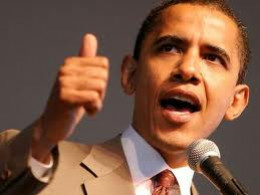
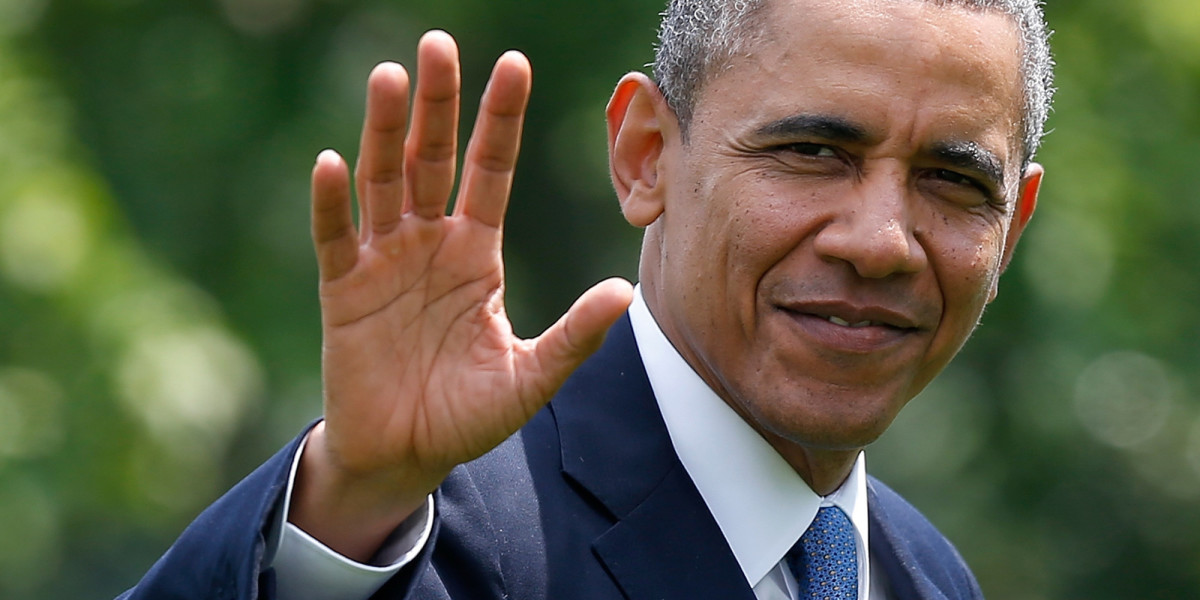
Aside from the hurt and bitter feelings of some die-hard Mitt Romney supporters and the white-hot anger of the Anti-Obama people, electing President Obama for a second term created history again for the American people.
During Black History Month from 2008 forward, it can be said that a man of African heritage ruled the most powerful nation in the world for eight years! He ruled a nation where less than 200 years previously his African heritage would have pegged him a slave. Just 40 years shy of the Civil Rights Movement did a minority take office!
It does not matter that President Obama is a Democrat or that he is bi-racial. Because there is a shred of African in him, he is considered African American according to American racial tradition. He was born in America, no matter what the people say opposite about that. He lived his life mostly as an African American and will be listed in the annals of time as an African American President! During the first election, however, it was not so.
What the president did for Americans is to introduce the notion that race should not matter.
Black By Default

Over the course of the years President Obama served the country, the attitudes of many African Americans changed towards him.
Apparently, the fact that his father is not American and actually from an African nation means that Barack Obama, the president, has no African American stock in his genes.
He is the first generation, and his ancestors did not share in the humiliation of the African American historical struggle OUTSIDE of the Civil Rights Movement.
No matter how the dial is twisted, the president is of African descent and can call himself African American or Black, but he cannot claim the struggle that generational groups of African Americans claim.
The president knows his ancestral roots and has a connection to his heritage if he so desires. He has a brother residing overseas to connect to his father’s homeland. President Obama’s connection to true African American culture is through his wife Michelle who is actually a generational American of African descent.
What the president did for Americans is to introduce the notion that race should not matter. It seems that African Americans are so psychologically distressed culturally as a group that they will African-Americanize any and every person with African bloodlines—whether from slavery ancestrally or Africa itself!

Tiger Woods
Source
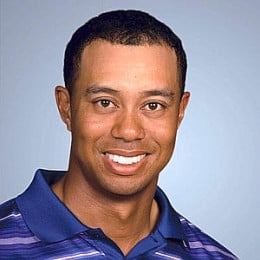
It is no surprise that so many shades of African Americans exist with so many hair textures. Bi-racial and multi-racial people who have African ancestry are not allowed to express their unique heritage without ridicule. Even if, say, Tiger Woods says he is not African American, that group will claim him by default.
In 1997, Tiger woods attempted to except himself from the African-American community at large and defined himself. Silly man!
People are not allowed to define themselves in American society! Regardless of what he decided to call his ethnic and racial disposition, most of the world labels him Black.
President Obama slyly avoided racial remarks about his origin--the thing that Tiger Woods should have done on the Oprah Winfrey Show in 1997.
When asked by Oprah did having the label of "African American" thrown at him bother him he admitted, “It does...I'm just who I am, whoever you see in front of you.”
"I'm just who I am, whoever you see in front of you."
The issue with Tiger Woods statement is that he did not leave it at that. He proceeds to describe what he IS when what people SEE in front of them is a light-complexioned Black man.
President Obama did what Mr. Woods should have done. He let people describe what they saw and did not pander to any direction. People saw, eventually, an African American president; no, an American president with African-American ethnicity and racial social classification.

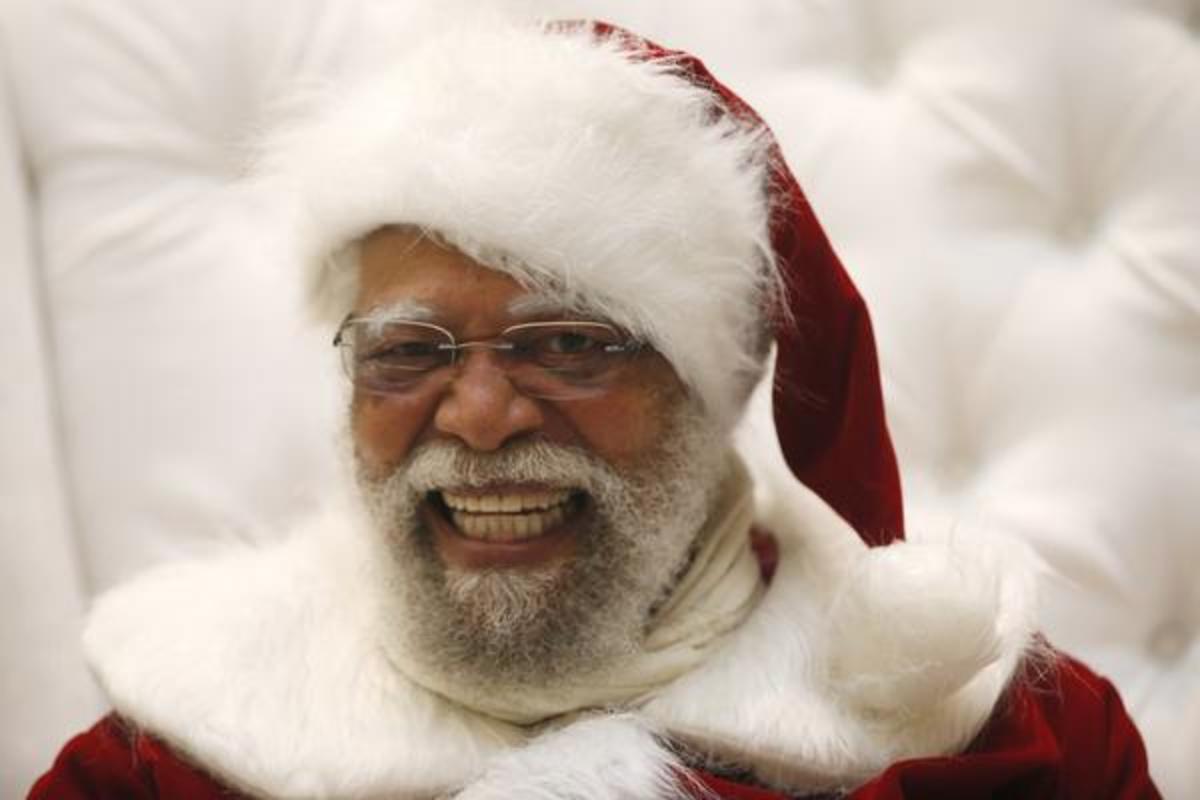
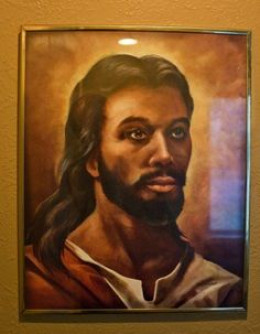
Black People Claim Everybody
Source
Source

Why all this grabby behavior by this Group of Americans?

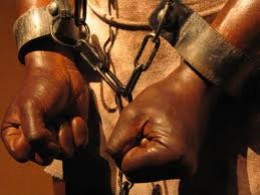
The simple answer is the past is not a proud one for this group. Millions of people were purchased by Europeans and taken to the American continent against their wills.
In The Truth about Being Black in America can be found a perspective on the psychological implication of this past of servitude. In it is a term coined for the article called Collective Social Regard or CSR. CSR can be applied to any group but fits specifically well with African Americans because of their unique, singular and peculiar history.
Since the past is such a negative matter for this group of Americans, it claims as much of the present and future that it can to fill the void of cultural heritage.
In America, some of these citizens go so far as to try to create alternate cultural heritages to differ extremely from the majority, Caucasians. The irony about diverging in such a way is that the new cultures are based on European values, and not those of the mysterious Africans forced to emigrate in ships.
African Americans are a uniquely American group through and through. This group has a heritage that even the Native Americans can not equal because their ancestors migrated here by land and sea—by choice!
No other group was forced as an entire race of thousands of ethnicities to relocate, as were African Americans with the additional suppression of their culture and language. Few other groups or races. if any other. in American history survived cultural genocide committed against them, as the African American.
The election of President Obama for two terms proves that racial barriers can be overcome by minorities grounded in his or her history and comfortable with his or her heritage as is President Obama. Culturally, he and his family are similar enough to the majority to appeal to their humanity.
In addition, as a bi-racial man in a European culture, President Obama had to bear his burden of ridicule from both Black people and White people. He had to decide with which group he identified most and hopefully be accepted into that group. He struggled with identity issues and found that he identified with African Americans. His struggle was real and personal though his heritage was not of slave stock.
Will the son (or daughter) of a slave ever be president of these United States? Will a person who has ancestral stories of sharecropping after the Emancipating Proclamation was put forth by the Great and Honorable President Abraham Lincoln gain such lofty heights? Does it matter if that ever happens because a minority won the race? The answer to those questions depends on the perspective from which the reader views these words.
Source

When Americans voted, they voted for a president of the United States of America.

Americans did not vote for a Black president. Barack Obama did not run as a Black candidate. In meetings of some African Americans around the nation, certain expressions can be heard that are acridly describing the president calling him the head N**ger in charge.
Statements by comedians who say, “You know how WE do,” implying that there is some difference in the methods of enjoyment, style, life or integrity of Blacks as opposed to other races and ethnicities.
There well may be many cultural differences. Those differences are not a conviction that the “WE” are honorable and praiseworthy people.
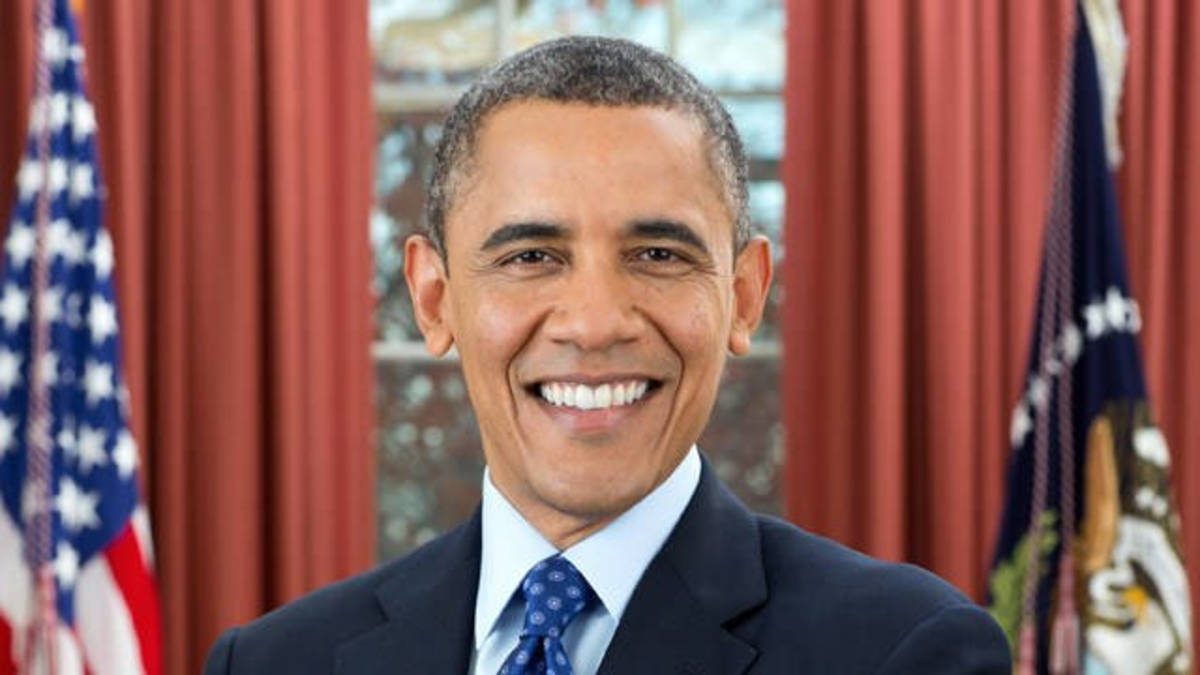
President Obama means so much to African-Americans because he represents something good and positive like unto Martin Luther King, Jr.
Source

Conclusion

The former president will always be to African-Americans the face of freedom in America. Maybe one day, some minority woman of Mexican ancestry will rise to popularity and represent the Latinos. Will the Latinos accept this person if he or she is born in the US Puerto Rico, with one parent from Spain and the other parent with Mexican heritage? For now, the spotlight is on President Trump, which to many seems like a step backward in "post-racist" America.

Place of Discovery

In life sometimes we can be refugees or outcasts due to persistent struggle. It is a strange way to look at things being that so many people are refugees seeking amnesty from one country or another. Individually as we seek amnesty from the trials of life, some of us seek amnesty in a drug or an alcoholic beverage finding it to be a trap worse than the thing originally causing a need for sanctuary!

Sweet as it can be, life Will have challenges, challenges potentially able to chase away the choicest chances of renewal and reward down paths that prove difficult to course correct. Notions arising that lead us to seek escape from life because of with what we are challenged overwhelms us to the point where we cannot be the hero of our own life story, warrants a reflective moment or more to reevaluate the purpose of life.

Why are we here? Where are we going? What is my true origin? Levels of discovery in these questions take us on emotional journeys and religious quests to find the centering answers that allow us the psychological steadfastness to endure and prevail. Short or long, easy or hard the journey to discovery is often where we find ourselves as we proceed to the eventual destination.

Journeying despite the factors of fraught littering the path has revealed personally who I am and who I want to be as I walk along the way outcast at times from life. What is that, pray, tell? I am a child of God. He has sent me here to Earth. He has given me a home with parents and siblings. Now I am a parent with children kind and dear to me.

I started a journey to Utah that led me down a path to see the destination God revealed to me as the stepping stones to a greater recognition of living--who I needed to be at that point. The stones are firm, but the water from which they provide me a dry crossing is cold because often do I fall in and have to start the trek across the waters anew. Feeling failure, a good instructor, God shows me, being outcast is sometimes the means of finding out with a vengeance that I am one of His chosen if I will have Him.

I, Refugee - The Hero of My Life StoryI want you to know reader, that I was at the lowest point of discouragement I could be and still call myself a Christian when we started this Utah journey. This is the first installment of being trapped in Utah.

Tales from Umtata: Golden Investigator

Missionary Experiences Are What You Make Them


As missionaries for The Church of Jesus Christ of Latter-day Saints, we take the opportunity to study the gospel daily so that we may use that knowledge to lead people to Christ. Being a missionary does not exempt us from our human frailty, however. My weakness is in full bloom this morning.  

Wake up Elder Johnson,” Shouts Elder Thompson gleefully. “It’s time for comp’ study.” 

Glaring momentarily at him, I roll around n bed a bit before rising. Elder Thompson wakes me up in the middle of such a beautiful dream, resentment. I had a new companion in my dream. 


It was no secret that Elder Thompson and I have friction in our companionship, except to Elder Thompson. I hide it from him out of resentment. Younger than I am and chippier every day, I envy.

“What are we going to study today, Elder,” I said attempting to hide the irritation in my voice. Not that it matters. This guy is so oblivious to my issues with him. Or is he?

Elder Thompson furrows his brow and suggests, “The first discussion. If we study it today, we will teach it.” 

Resentment and all, I believe him. Tossing the word out there so often is annoying, but I resent him because he is such a good person even though I want him to be evil so that I could feel justified in being upset with him. I cannot stay upset long. He is too cheerful! I am not a morning person. He is not a good leader either. I have a detailed list of all his flaws. All of them!

After Breakfast and personal study, we go over the plan for today. We were told that planning in the morning is highly effective. We want, if nothing else, to be productive. So, we plan to do some street contacting for the morning and service at the Hospital counting pills. We scheduled a few appointments with the hope that they will not fall through. We have no backup plan because the concept eludes Elder Thompson. 

I am his “Greenie,” and I resent it! Did I say I resent it? I really resent it!

After coordinating some last-minute plans with the other two Elders in the boarding, Elder Danisa, and Elder Streadbeck, we shove off to start our day. About noon, we return to the boarding to lunch for two hours—planning not to return for dinner. 

Elder Thompson and I are off to work. All of our appointments seem to be canceling as we get to their homes! On top of that, we walk in the sweltering sun uphill both ways! How is that even possible! Only in Umtata (Mthatha now)!

Well, okay, maybe not both ways—but it feels like it. After rescheduling all of the appointments, Elder Thompson suggests that we tract Singqangana Crescent. (When saying this word, Singquangana, the "q" makes a popping sound. Xhosa is an exciting and beautiful language!) I agree fully expecting to find some good people to teach. finally. Resentment is at an all-time low due to the heat and tiresome walking.

The Heat Beats Down. 

We two, heads high, armed for battle, marched up to the first house to begin our adventure. Every door we go to no parents are home or they cannot speak English! A few said "No," which is uncommon in Xhosa Culture when it comes to having messengers of God. I remember that day like it was this morning, though it was 20 years in the past.

Discouraged, we shoved on with little faith in finding anyone. We tracted for 5 hours and it was getting dark. 
Elder Thompson wanted to turn back and do something more effective but we resolved to tough it out until the end of that long uphill street. After a few more rejections or no contacts, I gave up and wanted to go home. I was sick of no success. Elder Thompson felt the same way, but he looked at me, and then looked up the street. We had five more houses, and we wanted to get them. 

“Let’s just do a few more,” he said. “We might have some success.” 

“Well, if we are going to have success, we are teaching at the next house.” 

“We will teach at this next house,” promised Elder Thompson with determination wanting to get a good investigator for us to teach. 
(A person interested in our message was an investigator. Missionaries call the friends where I live currently.) We had prayed for such an experience. We hoofed it to the door and knocked but no answer. As we, crestfallen, moved to leave, the door crept open revealing the face of a lovely middle-aged Xhosa woman. She regarded us intently waiting for us to explain our presence at her door at such an hour in the night, about 7 pm.  


Spiritual High


“We are missionaries from The Church of Jesus Christ of Latter-days Saints,” began Elder Thompson. “We have a message about a plan that God has for us to be happy and we want to share it with you and your family. Would you be interested?” 

“O yes, I would like for you to share it with us, but I have nowhere for you to sit. In our house live others who I let out to (rent), and my family and I only use this one room.” 

“We don’t mind,” I said. “We are here to share with you not for comfort, but out of love.” 

“Is your husband home,” asked Elder Thompson. 

“No, I am divorced,” she responded. Red flags went off in our minds. We knew better than to enter a woman’s home without a male escort with us. It would look shady to the neighbors and our Mission President. Something burned inside of us to teach, though. 

“Can we teach you outside before the night becomes too dark,” says Elder Thompson. 


English was not her first tongue, though she spoke it beautifully. Elder Thompson and I had grown into the habit of speaking very simply and directly among our Xhosa-speaking family. So, if the dialogue seems contrived, it is.

“Yes," she responded agreeing to meet with us, "On my stoop. I will get you some chairs and I will sit on the stoop.” She went inside. We looked at each other, knowing our goal to teach families. We questioned each other with our eyes. 

We walked around the house to the open area where the stoop was, “Do you think we should teach her," I asked. 

“Yeap.” 

“I do too, I hope it goes well.” 

We sat well in the open where neighbors and passersby could see and commenced the introduction of ourselves and the discussion, the first discussion. Immediately the Spirit attended us. Her name is Nomakwasi Magwensthu and she listened to us. I felt as if my heart would burst with joy as I spoke and listened—bearing testimony of my companion’s words and those of my own. 

She believed all. I asked, "If we gave you a copy of The Book of Mormon: Another Testament of Jesus Christ, will you read it?” 

“Yes, but I cannot have it now.” I was crushed by her response. Did she not feel the spirit, I questioned internally? “I will take it later because I have no money to pay for it now. How much does it cost? I will send my son after it.” Immediately my soul delighted again.

“Nothing,” answered Elder Thompson gleefully, “It is a free gift to you from us.” 

With that, she took the book, hugged it, and caressed it. We continued with the discussion and scheduled another appointment to follow up. With that discussion, we knew a baptism would come. Our walk downhill to our boarding seemed almost effortless as we floated on the feelings we experienced just moments before at Sister Magwentshu’s. My respect and love for Elder Thompson increased and my acrimonious thoughts of him ceased too.